
Fabregas never relied on blistering pace. Watch his best years at Arsenal or Chelsea, and what stands out is the two seconds before the pass—the little scan over the shoulder, the shift of his hips, the way he shapes his body to open a lane that never seemed there. He was a midfielder who treated space like a chessboard, and for a decade, few in England could read it faster. That is the core of the Fabregas story: not flair for its own sake。but control that made everyone around him look calmer, sharper, and better positioned.His rise at Arsenal felt almost unfair. A teenager from Barcelona’s La Masia, he arrived in 2003 and by 2005 was already the engine of a Premier League side. I still remember a 2007 Champions League night against AC Milan at the Emirates—Fabregas, barely 19, kept demanding the ball against Gennaro Gattuso and Clarence Seedorf, two midfielders who made a living by bullying opponents. He didn’t hide. He took the ball on the half-turn, drew contact。and released. That was the Fabregas pattern: absorb pressure, then punish it with a single pass. In 2009-10 he scored 19 goals and assisted 19 in all competitions, numbers that blurred the line between playmaker and forward.Returning to Barcelona in 2011 should have been seamless. It wasn’t. Fabregas joined a midfield with Xavi and Andrés Iniesta at their peak, and the tactical crowding forced him into unfamiliar roles—false nine, wide forward, even a deeper pivot at times. He still contributed: 42 goals and 50 assists in 151 appearances across three seasons is not the record of a failure. But the fit was never as clean as the narrative suggested. The lesson is subtle. A player can be exceptional and still be a tactical mismatch;
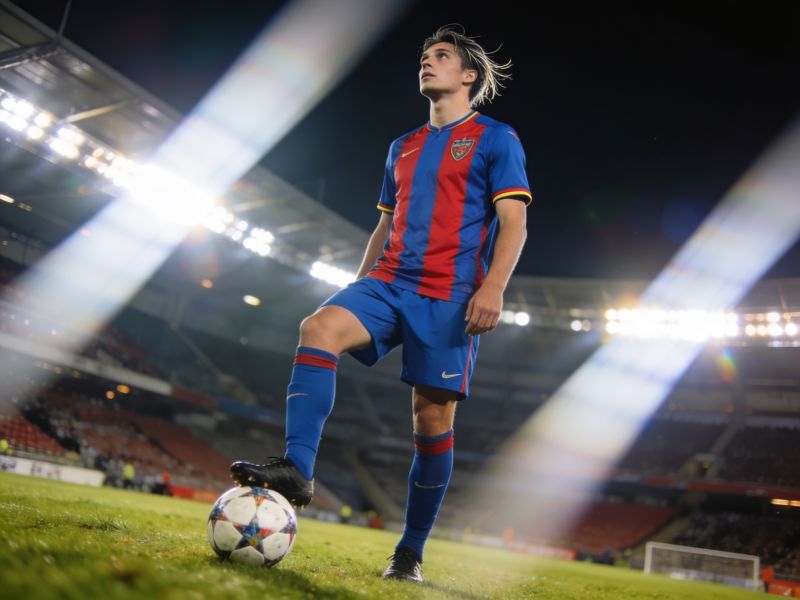
Fabregas’s Barcelona spell was more about adaptation than decline。and the stats support that more than the lazy commentary does.At Chelsea, from 2014 to 2019, he became something else: a deep-lying passer who controlled tempo rather than bursts. The 2014-15 title run was a masterclass in quick, vertical distribution. Diego Costa and Eden Hazard thrived on the early ball over the top, and Fabregas delivered it with almost irritating consistency. He led the league in assists that season (18), many of them first-time passes after a single look. What I find most revealing is how often he chose the simple pass in build-up and saved the risk for the final third. That restraint is why he stayed effective in a faster。more physical league even after his legs had lost a yard.Fabregas’s legacy is not a highlight reel of dribbles. It is the argument that intelligence can outlast athleticism. He won the World Cup and two European Championships with Spain。
yet his club career carries a quiet what-if—the sense that the Arsenal project and the Barcelona return each ended a season too early or a role too late. That ambiguity makes him more interesting, not less. For anyone coaching midfielders today, his game is a manual on scanning, body orientation。and the value of the pass before the assist. Fabregas didn’t just play the position. He explained it, one measured touch at a time.